
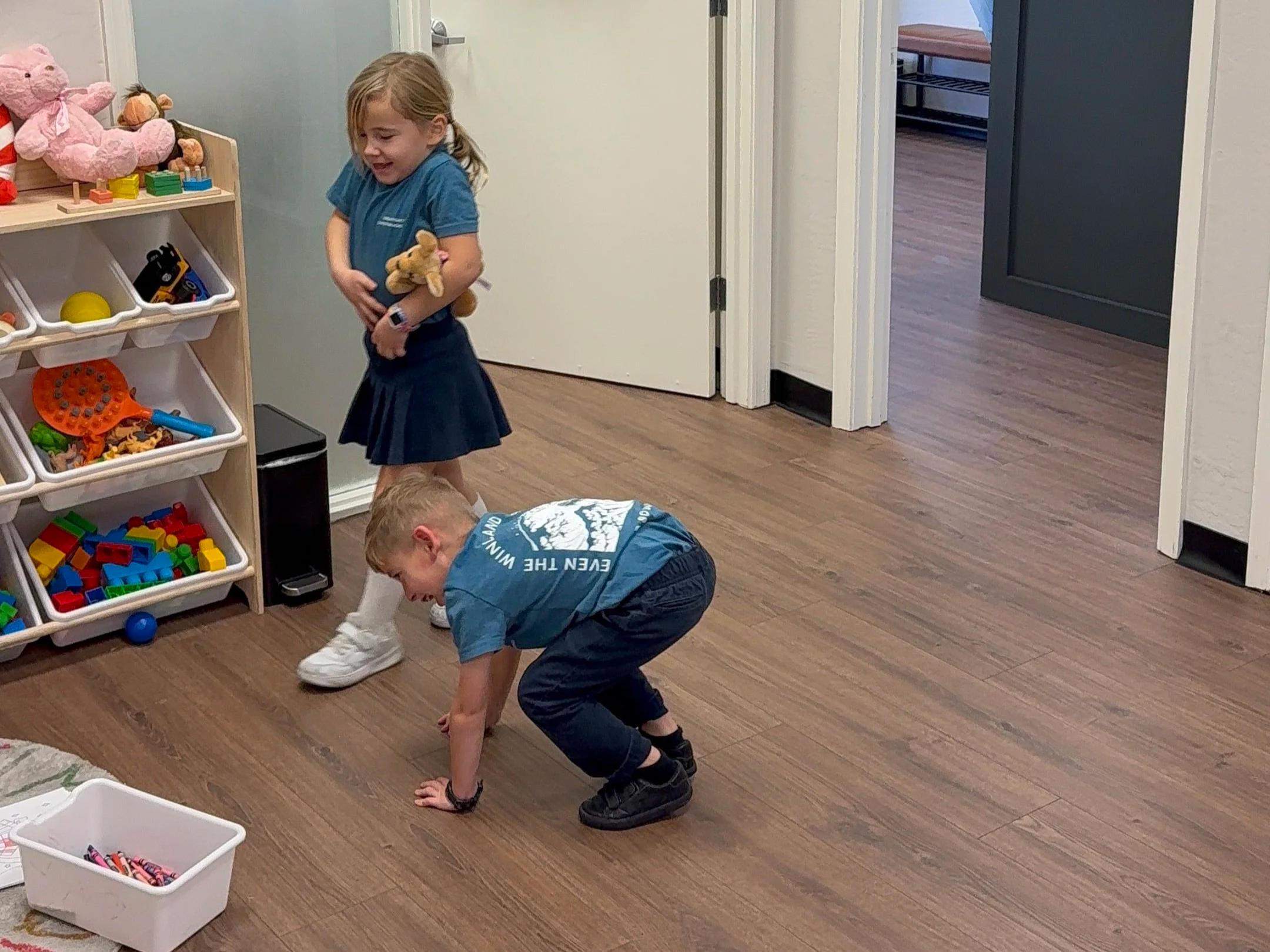
Does your child:
• Cover their ears in noisy rooms?
• Melt down during simple transitions?
• Refuse certain clothing textures?
• Struggle in crowded environments?
• Seem constantly “on edge”?
Parents across Gilbert, Chandler, Mesa, Queen Creek, and Tempe are searching for answers to sensory processing challenges.
Often, the conversation begins with behavior.
But behavior is the output — not the root.
At Kingdom Chiropractic, we look deeper.
Because sensory processing is not just a behavioral issue.
It is a nervous system regulation issue.
What Is Sensory Processing, Really?
Sensory processing is the brain’s ability to:
• Receive sensory input
• Organize it
• Interpret it
• Respond appropriately
Your child’s nervous system filters thousands of pieces of information every second:
Sound
Light
Touch
Movement
Internal body signals
Emotional cues
When regulation is balanced, the brain filters efficiently.
When regulation is overwhelmed, everything feels amplified.
That amplification often looks like:
• Emotional meltdowns
• Hyperactivity
• Withdrawal
• Anxiety
• Sleep challenges
• Digestive tension
The Autonomic Nervous System and Sensory Overload
The autonomic nervous system has two major branches:
Sympathetic → fight-or-flight
Parasympathetic → rest-and-digest
Children with sensory processing difficulties often live in chronic sympathetic dominance.
That means:
Their nervous system is constantly scanning for threat.
When the body stays in stress mode:
• Sounds feel louder
• Touch feels irritating
• Bright lights feel overwhelming
• Crowded spaces feel unsafe
• Transitions feel threatening
It is not misbehavior.
It is neurological overload.
Why Some Children Become Dysregulated
Several factors may contribute to sensory dysregulation:
1. Birth Stress
Even routine deliveries create significant mechanical pressure on the upper cervical spine.
If unresolved, that tension may affect:
• Vagal nerve tone
• Stress regulation
• Digestive function
• Emotional stability
2. Early Developmental Stress
Frequent illness, antibiotics, sleep disruption, or emotional stress can shift the nervous system into chronic activation.
3. Modern Environmental Stimulation
Screens.
Noise.
Fast-paced schedules.
Academic pressure.
Children today experience higher levels of neurological input than previous generations.
Without regulation, the system becomes overloaded.
The Brain-Body Connection
Sensory regulation involves:
• The brainstem
• The vagus nerve
• The cerebellum
• The spinal cord
If communication between the brain and body is compromised by spinal restriction or subluxation, integration may become inefficient.
Chiropractic care does not “treat sensory processing disorder.”
It evaluates whether spinal tension is interfering with neurological communication.
When communication improves, integration often improves.
The Role of the Vagus Nerve
The vagus nerve plays a central role in:
• Emotional regulation
• Social engagement
• Digestive rhythm
• Stress recovery
Upper cervical tension can affect vagal tone.
When vagal tone improves:
• Children calm more easily
• Sleep often improves
• Emotional transitions smooth out
• Digestive function stabilizes
This is why nervous system–based pediatric chiropractic can be supportive for sensory-sensitive children.
How the Zone Technique Supports Sensory Regulation
At Kingdom Chiropractic, we use the Zone Technique to assess neurological balance across systems.
Children with sensory challenges often show imbalance in:
• Nervous system zone
• Glandular zone
• Digestive zone
Restoring balance allows the body to regulate more efficiently.
This approach is gentle, precise, and tailored to children.
Signs Your Child May Be Neurologically Overstimulated
You may consider evaluation if your child:
• Avoids certain clothing textures
• Has strong reactions to noise
• Struggles with hair brushing
• Has difficulty sitting still
• Becomes overwhelmed in stores
• Has emotional outbursts disproportionate to the situation
• Struggles with sleep
• Experiences digestive irregularity
Parents in Chandler and Mesa often search for:
• Sensory processing support Chandler AZ
• Pediatric chiropractor Mesa AZ
• Holistic chiropractor near me
• Overstimulated child help
If that’s you, you’re not alone.
A Holistic, Family-Based Approach
Sensory dysregulation often affects the entire household.
When one child is overwhelmed, the family dynamic shifts.
Many families begin care together.
When parents regulate their own nervous systems, children often respond positively.
Kingdom Chiropractic serves families across:
Gilbert
Chandler
Mesa
Queen Creek
Tempe
Providing neurologically focused pediatric and family care.
Is Pediatric Chiropractic Safe for Sensory-Sensitive Kids?
Yes.
Adjustments use extremely light pressure — no forceful twisting or cracking.
Many sensory-sensitive children tolerate and even relax during care because the approach is calm and gentle.
A Faith-Centered Perspective on Development
We believe children are designed with remarkable adaptability.
Our role is not to suppress behavior — but to support regulation.
When the nervous system is clear, children thrive.
Looking for Sensory Processing Support in the East Valley?
If you are searching for:
• Sensory processing chiropractor near me
• Pediatric chiropractor Chandler AZ
• Pediatric chiropractor Mesa AZ
• Holistic family chiropractor East Valley
Kingdom Chiropractic would be honored to support your family.

